
The Misleading Shape of Justice
Queen of HeartsThis flow explores how the novel distinguishes legal ownership, moral grievance, and violent revenge through the fate of Cy Goldman’s Spanish acquisitions.
increasing Bearing strength in each event
 decreasing
Bearing strength in each eventdecreasingTreasures on Display
Treasures on Display
A producer’s boast
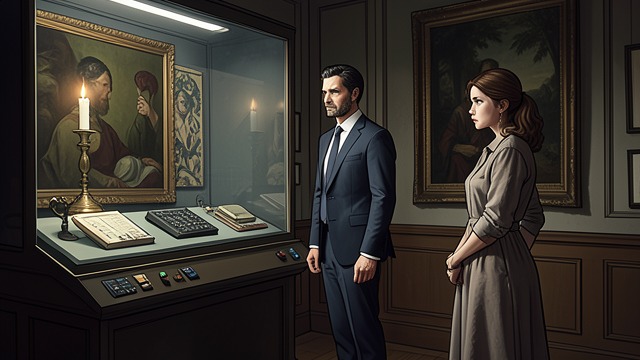
Cy Goldman describes his purchases from Spain, including jeweled candlesticks, a chapel, and an El Greco. He treats his acquisitions as proof of wealth and taste.
Uneasy admiration
Other passengers hear the story as eccentric collecting, while Stella describes the scale of his plan with amused familiarity. The question of how the objects left Spain remains mostly unexamined.
The objects first appear as glamorous possessions, not as a source of moral conflict.
A Convent’s Need
A Convent’s Need
A sale under pressure
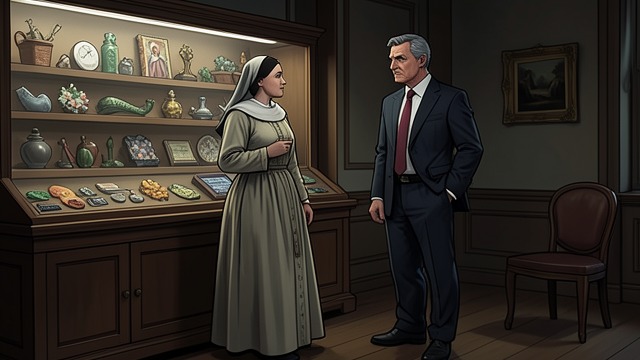
Juan later explains that the convent needed repairs and sold its objects to Cy. The sisters may have understood them as religious goods rather than works of exceptional market value.
Two accounts of fairness
Cy sees a mutually beneficial purchase; Juan sees an outsider taking advantage of the convent’s lack of knowledge. Neither account fully resolves what fair exchange required.
The conflict is built from a gap between legal transaction and cultural understanding.
A Sacred Chapel Repurposed
A Sacred Chapel Repurposed
Collection as spectacle
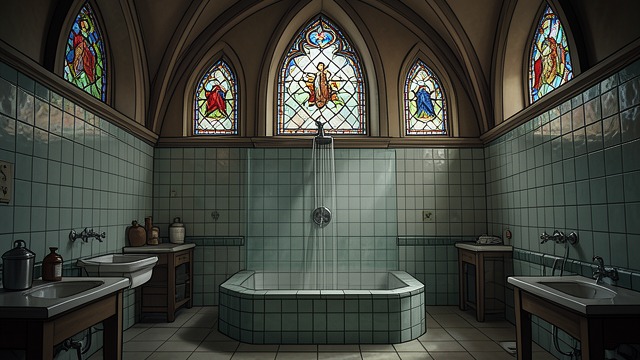
Cy plans to rebuild a Spanish chapel at his estate as a bathhouse. He jokes about showering beneath saints in stained glass, revealing how thoroughly he treats sacred material as decorative property.
Juan’s perspective
Juan sees the plan as an affront to his family and the convent. What Cy presents as an extravagant project becomes evidence of cultural disrespect.
The tour exposes the values beneath the owner’s showmanship.
Revenge in the Library
Revenge in the Library
A confrontation concealed
Juan hides in the library and confronts Cy alone. Cy dismisses his demand to return the objects and insists that the sale made them his property.
Justice becomes murder
Juan kills Cy with one of the candlesticks, believing he is acting for the convent. His intention to restore what was taken cannot undo the violence of his act.
The scene exposes revenge as a morally compromised response to exploitation.
A Fire That Harms Innocents
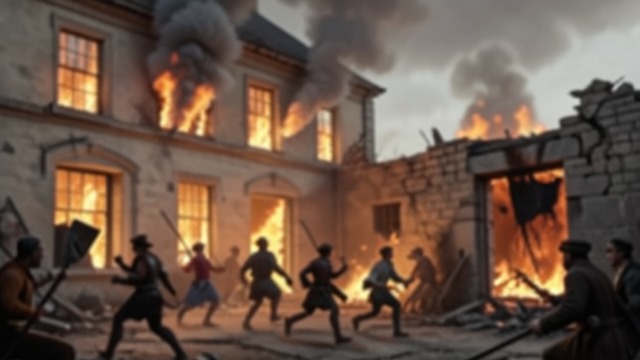
A Fire That Harms Innocents
Retaliation expands
Juan sets fires after confessing and endangers the people he has already wronged through the murder. The flames also threaten the estate’s animals and servants.
Moral claims collapse
The fire destroys any appearance that his violence serves justice. Juan’s grievance may be real, but his actions produce indiscriminate harm and his own death.
The novel leaves the legal status of the sale unresolved while making the cost of revenge unmistakable.
July 12–13, 1934, aboard RMS Berengaria
Before the estate gathering, during the Spanish purchase
August 3, 1934, during the castle tour
Late August 3, 1934, after the dinner
August 4, 1934, after Juan’s confession
